The S&P 500 has declined roughly 4% from its recent peak. While market swings can be unsettling, how we react to temporary pullbacks can significantly impact long-term success. A few key points to keep in mind:
- Pullbacks are normal. The S&P 500 has averaged 4.6 pullbacks of 5%+ per year since 1980, yet has delivered positive annual returns in most years. In 2025, for example, the market still returned 18% for the full year despite a ~19% drop following the April tariff announcement.
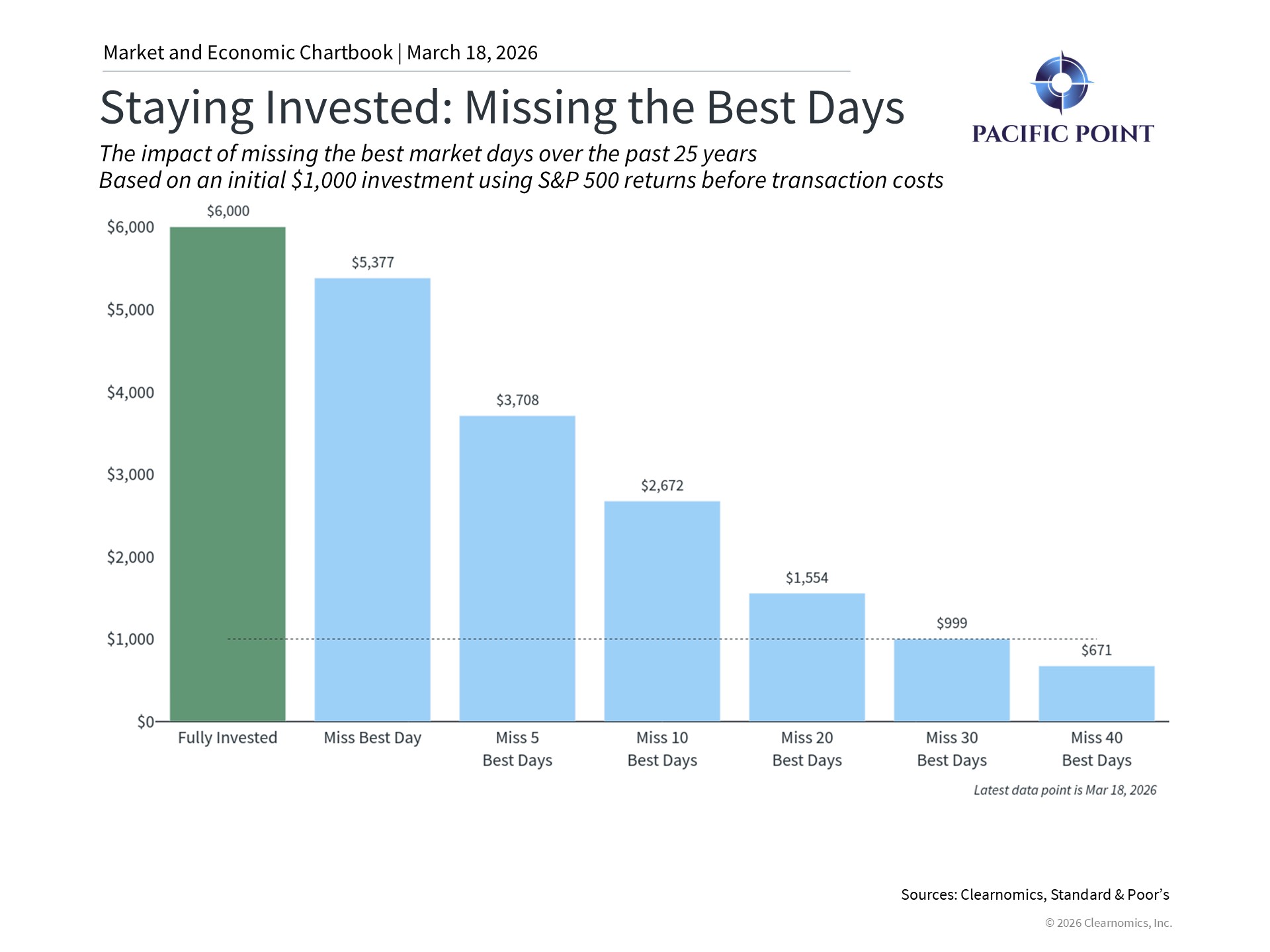
- Timing the market is difficult. Strong recovery days often follow sharp declines, making it nearly impossible to time things perfectly. Staying invested through volatility has historically been the better approach.
- Waiting on the sidelines is costly too. Since 1927, waiting for a single-day drop of -5% has meant sitting out an average of 303 days and missing an average return of 13.8%.
As the chart illustrates, missing even a handful of the market’s best days can be counterproductive. Maintaining a long-term perspective — rather than reacting to short-term moves — has historically been the most effective path to building wealth.